
NYC Local Law 97 and Your Condo or Co-op Fees: What Owners Will Actually Pay
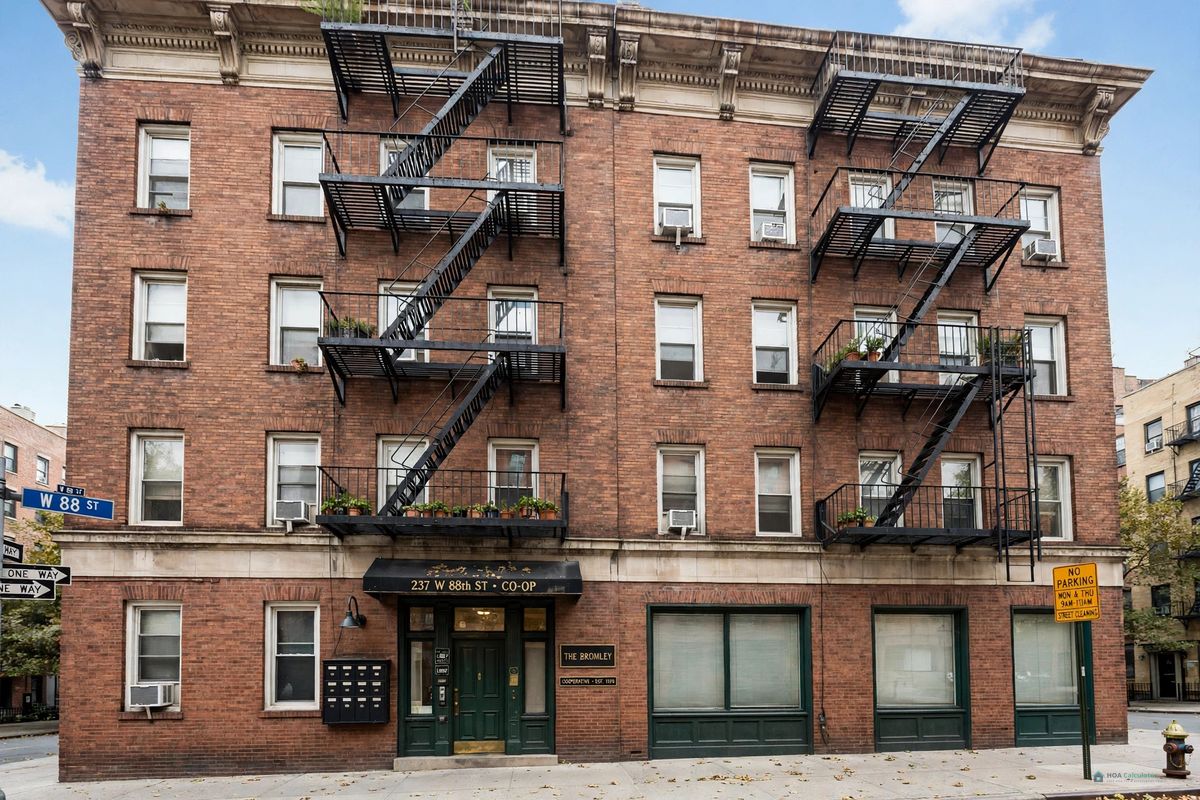
Of all the forces pushing New York association charges upward — labour contracts, insurance, façade law — Local Law 97 is the one with a statutory timetable and a calculator attached. It is also the most misunderstood: owners hear "emissions fines" and picture a penalty notice, when the actual financial event for most buildings is a capital programme. This guide explains what the law requires, what compliance realistically costs, and how those costs travel into your monthly charges.
What the Law Requires
Local Law 97, part of the Climate Mobilization Act of 2019, sets emissions limits for buildings over 25,000 gross square feet — roughly 65 percent of the city's building stock by count of large properties, including most mid-size and large condos and co-ops. Limits run in compliance periods: 2024–2029 (relatively lenient — most buildings already comply), 2030–2034 (substantially stricter), and tighter periods beyond. Covered buildings file annual emissions reports with the Department of Buildings, benchmarked through the city's energy disclosure system; the first reports were due from May 1, 2025. A building over its limit pays $268 per excess ton of CO2e annually until it complies. Separate penalties apply for failing to file or misreporting. Certain buildings — including many with rent-regulated units — follow an alternative prescriptive path (Article 321) of specified energy measures instead of strict limits.
Why Retrofits, Not Fines, Are the Real Story
For a building modestly over its 2030 limit, the fine might run to tens of thousands a year; the retrofit that eliminates it — electrifying heat and hot water, envelope sealing and insulation, window work, controls — runs to millions once. Boards do the arithmetic every owner should: fines are a recurring, escalating, value-destroying expense that buys nothing, while capital work, however painful, ends the exposure and cuts energy bills. Expect most buildings to choose capital work, financed the three ways buildings always finance it: reserve accumulation (higher charges now), loans (higher charges for the loan term), or special assessments (a lump sum now). Your charges rise under every branch of that decision tree — the only choice is the shape of the increase.
What It Means per Unit
There is no citywide per-unit figure, and any source quoting one without naming the building is guessing. The variables are the building's current emissions intensity, its heating fuel (oil and steam systems fare worst; buildings already on efficient systems may comply into the 2030s untouched), and its size — engineering and retrofit costs divide by the unit count. The reliable way to size your exposure is the building's own Local Law 97 study: most boards of covered buildings have commissioned one, and it states the compliance gap, the recommended measures and a cost estimate. Ask for it by name. If your building has not commissioned a study, that absence is itself the most important fact in this article for you.
Model Your Building's Likely Charge Increases Over 10 Years
Use Our Free HOA Calculator →Five Questions to Ask Your Board
- Has the building filed its emissions report, and are we within the 2024–2029 limit?
- What does our LL97 study project for the 2030–2034 limit — compliant, or a gap of how many tons?
- What measures does the engineer recommend, at what estimated cost, and on what schedule?
- How does the board intend to fund it — reserves, loan, assessment — and what does each option do to monthly charges?
- Are we pursuing available incentives, concessional financing (including NYC Accelerator guidance and state/federal programmes), or a renewable energy credit strategy for any residual gap?
Buyers should ask the same five questions during due diligence, in writing, and treat "the board is looking into it" in a building with oil heat as a priced risk. Sellers in buildings with a published, funded compliance plan hold a genuinely marketable asset: certainty. Our New York City guide places LL97 in the full carrying-cost picture, and the state guide covers the $809 New York median these charges feed into.
Sources: NYC Local Law 97 of 2019 (Administrative Code § 28-320 et seq.), NYC Department of Buildings guidance and rules, Urban Green Council analyses. General information, not legal or engineering advice.
Frequently Asked Questions
A New York City law capping greenhouse-gas emissions from buildings over 25,000 square feet, including most larger condos and co-ops. Buildings report emissions annually and pay $268 per excess ton of CO2e per year if they exceed their limit. Limits for 2024–2029 are lenient; the 2030–2034 limits are the ones driving retrofit programmes.
📊 Calculate Your HOA Costs
Use our free HOA Fee Calculator to estimate your true lifetime HOA expenses — with year-by-year breakdown.
Calculate Now →Related Insights & Guides
Mehr Farooq, Editor
HOAFeeCalculator.com is an independent educational website edited by Mehr Farooq. Its state fee figures come from U.S. Census Bureau and FCAR data — see our methodology page for the full sources and method.