
St. George, Utah HOA Fee Calculator 2026
St. George has been one of America's fastest-growing metros for two decades, and it built that growth through associations. The median HOA fee actually paid across the St. George metro is $135 per month (U.S. Census Bureau, ACS 2025, ±$23) — a whisker under Utah's $142 state median — and 39.4 percent of owner households pay one. Red rock, second homes, retirement communities and a water supply that dominates every local growth argument: the fee here buys desert infrastructure in a boomtown that is still being built.
Average HOA Fees in St. George by Neighborhood Type
| Property Type | Average Monthly Fee | Annual Cost | What's Included |
|---|---|---|---|
| Master-Planned Community (SunRiver, Desert Hills) | $150/mo | $1,800/yr | Amenity and recreation operations, golf-adjacent landscaping, trails |
| Age-Restricted / 55+ Community | $165/mo | $1,980/yr | Recreation centres and activities staffing on a base association layer |
| Townhome / Condo Association | $245/mo | $2,940/yr | Exteriors and roofs, desert landscaping, common insurance, reserves |
| New Subdivision HOA (Washington, Hurricane) | $95/mo | $1,140/yr | Entrances, common areas, parks — developer-era in the newest phases |
| Established In-Town Neighbourhood | $55/mo | $660/yr | Minimal common property, small associations |
What Do HOA Fees Cover in St. George?
St. George dues cover the desert-subdivision package: amenity and recreation operations in the master plans, trails and parks, common landscaping built around water-wise design, and — in attached product — exteriors, roofs and insurance, plus reserves under Utah's study regime. The local signature is water: landscaping here is an allocation decision before it is an aesthetic one, and associations carry the Washington County Water Conservancy District's pricing and rules inside their budgets. What dues never cover: interiors, mortgages, Washington County taxes — and in second-home-heavy communities, the management layer owners buy separately to watch an empty house.
What Drives HOA Fees Higher in St. George?
Growth and water, in that order and then reversed. New phases arrive with developer-era dues and turnover resets scheduled; amenity operations scale with rooftops. Water pricing and conservation rules — turf limits in new development, conversion incentives, district rate pressure — rewrite landscaping budgets continuously in a desert city debating its growth ceiling. Second, insurance and roof reserves across a young but sun-hammered housing stock: desert UV ages roofs and paint faster than the calendar suggests. Third, recreation staffing in the 55+ and master-planned tiers, where the activities programme is the product.
How Much Are HOA Fees in St. George?
Anchor on the metro median — $135, against $142 statewide and $186 in the Salt Lake metro — then ask the St. George questions. Who runs the association (developer or owners), and what does the reserve analysis say (Utah law requires one and requires its disclosure, below)? In second-home communities, what share of owners is absent, and how does the budget handle the collection and maintenance posture that follows? And everywhere: what is the landscaping water budget, and what happens to it under the district's next rate step? The answers separate the boomtown's sturdy associations from its brochure ones.
Are HOA Fees Negotiable in St. George?
Dues follow the declaration; no individual negotiation. In a purchase, Utah's disclosure framework creates the surface: credits for anticipated special assessments shown in the reserve summary, price reflecting turnover timing, and allocation of instalments at closing. In developer-controlled phases, get the projected owner-run dues in writing — in a metro growing this fast, the second owner's dues surprise is a genre of local story, and it is avoidable with one document request.
Do HOA Fees Go Up Every Year?
Yes — 4 to 5 percent is a fair planning band, with steps at turnover and when water pricing moves. Utah's reserve-analysis disclosure pushes boards to fund honestly, which steadies increases; the wildcards are water rates and the amenity cost curve in the recreation tiers. The calculator will project the line at your chosen rate — run 4 percent for an established community, 5 for a young one, and read the reserve analysis to see which of you is right.
Utah HOA Laws: What St. George Buyers Should Know
St. George associations sit under Utah's Community Association Act (§ 57-8a-101 et seq.) and its condos under the Condominium Ownership Act (Chapter 57-8): reserve analyses with buyer disclosure (§ 57-8a-211, § 57-8-7.5), association registration with the Department of Commerce, records and meeting rights, and the assessment lien (§ 57-8a-301). Washington County adds the water layer — the Conservancy District's rules and rates shape what associations may plant and what it costs — a local-government overlay on the private documents. The Utah state guide covers the framework; Salt Lake City, at the state's other end, runs the same Acts at metro scale.
How to Estimate Your Total Cost of Owning an HOA Home in St. George
The St. George stack: mortgage, dues, Washington County property taxes (Utah's primary-residence exemption helps those who actually live here — second homes pay the full rate, a St. George-specific line), insurance, and for second-home owners, watch-and-maintain services bought privately. A $520,000 SunRiver home at $150 dues and roughly $330 a month in full-rate taxes carries about $480 before the mortgage. Run the dues at 4 to 5 percent; in this metro the fee line grows with the town, and the town is not slowing down.
Calculate Your Future HOA Costs
Use the free HOA Fee Calculator to project this fee over 5 to 30 years — or compare three fee futures side by side with the Scenario Calculator.
How St. George compares
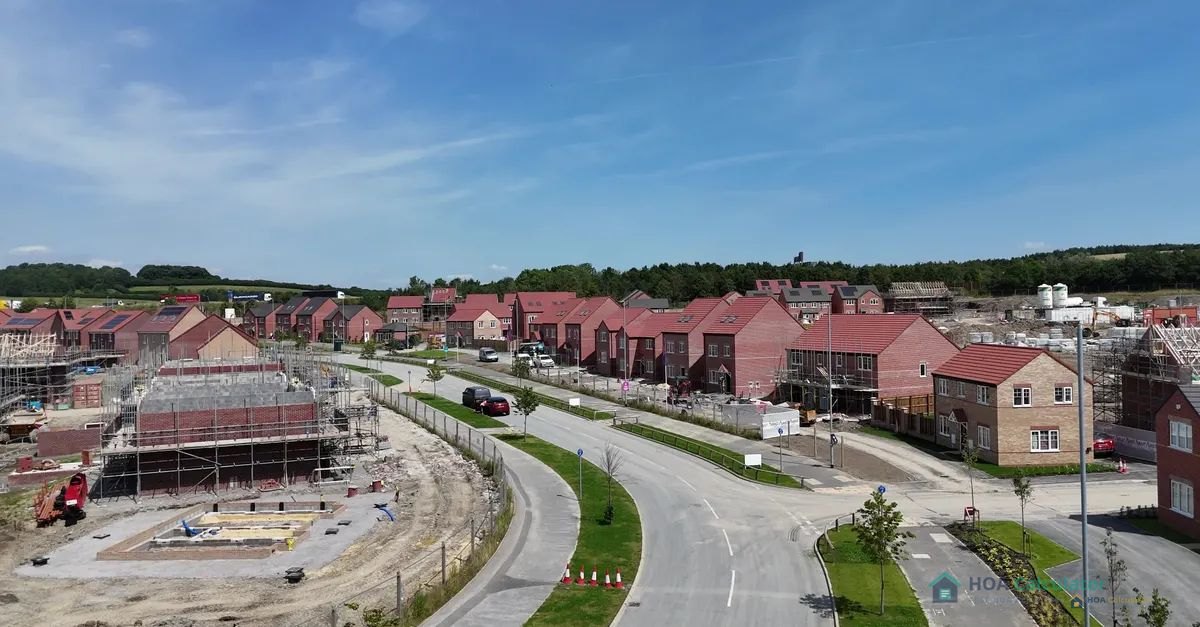
St. George's $135 metro median (ACS 2025) nearly matches Utah's $142 state median and sits well below the Salt Lake metro's $186 — remarkable for a metro whose housing stock is far newer, because new here means subdivisions at scale rather than condos. Its participation share (39.4 percent) is climbing with every phase. Compare Sun City, the desert retirement original: St. George is that model's growth-stage descendant, with conventional layered associations instead of a single recreation assessment.
Nationally, St. George belongs to the young-metro family — Raleigh, Nashville, Boise-style growth markets — where the median fee matters less than the documents, because so much of the stock has not yet met its first owner-run budget.
Frequently Asked Questions (FAQs)
What is the average HOA fee in St. George, Utah?+
What is a Utah reserve analysis, and why does it matter here?+
How does water affect St. George HOA fees?+
Do second-home owners pay different HOA fees in St. George?+
Can a St. George HOA foreclose for unpaid dues?+
Looking for Full Multi-Property Comparisons?
Use our advanced homepage comparison engine to pit multiple properties, tax rates, and fee structures against each other.
← Open Home Page Calculator