
Are HOA Fees Included in Your Mortgage Escrow? (Usually Not — Here Is How It Works)
Are HOA fees part of my mortgage escrow?
Usually not. A standard mortgage escrow account collects for property taxes and homeowner’s insurance only — the Consumer Financial Protection Bureau’s guidance on escrow accounts lists taxes and insurance, not association dues. Your HOA bills you directly, and you are responsible for paying it even though your lender never touches it. Your lender still counts the dues when it calculates your debt-to-income ratio for approval, and at closing the dues are prorated between buyer and seller by the day.
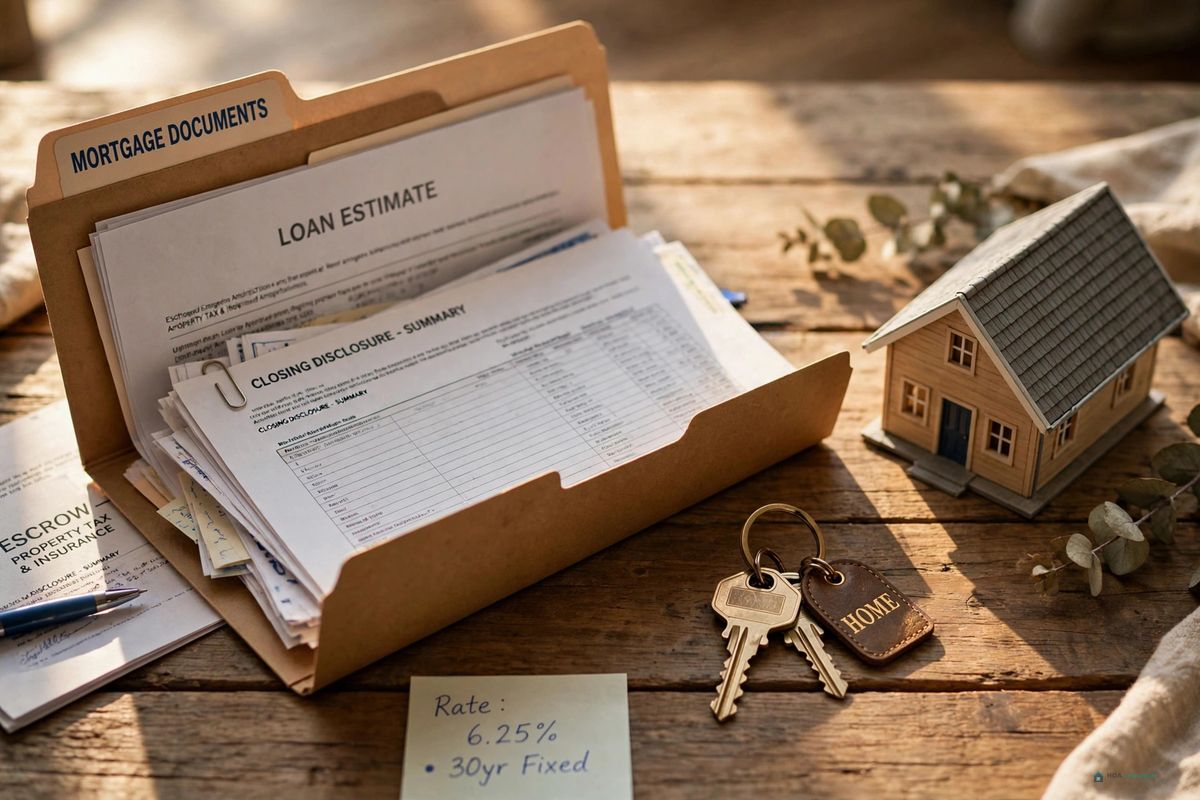
One of the most expensive misunderstandings in home buying: assuming the bank is handling the HOA bill because it handles the tax bill. It almost never is.
What your escrow account actually pays
When you pay a mortgage with escrow, your servicer adds roughly one-twelfth of your annual property tax and homeowner’s insurance bills to each monthly payment and holds the money until those bills come due. That is the whole job of the escrow account. The Consumer Financial Protection Bureau (CFPB) describes escrow accounts as covering property taxes and insurance premiums — association dues are not part of the standard arrangement.
A small number of lenders and servicers will collect HOA dues in escrow on request, or require it for certain loan products and condominium projects, but it is the exception. Unless your closing documents say explicitly that dues are escrowed, assume they are not.
Why lenders care about dues they do not collect
Even though your lender does not pay the HOA, it absolutely prices the dues into your loan decision. Monthly dues are added to your housing expense when the lender calculates your debt-to-income (DTI) ratio, so a $400 monthly HOA fee reduces the mortgage you qualify for exactly as if it were $400 more house payment. Underwriters verify the dues amount from the association’s documents during approval.
That is why the same income buys less home in a high-dues community — our guide to HOA fees and mortgage approval walks through the DTI maths in detail.
How dues are prorated at closing
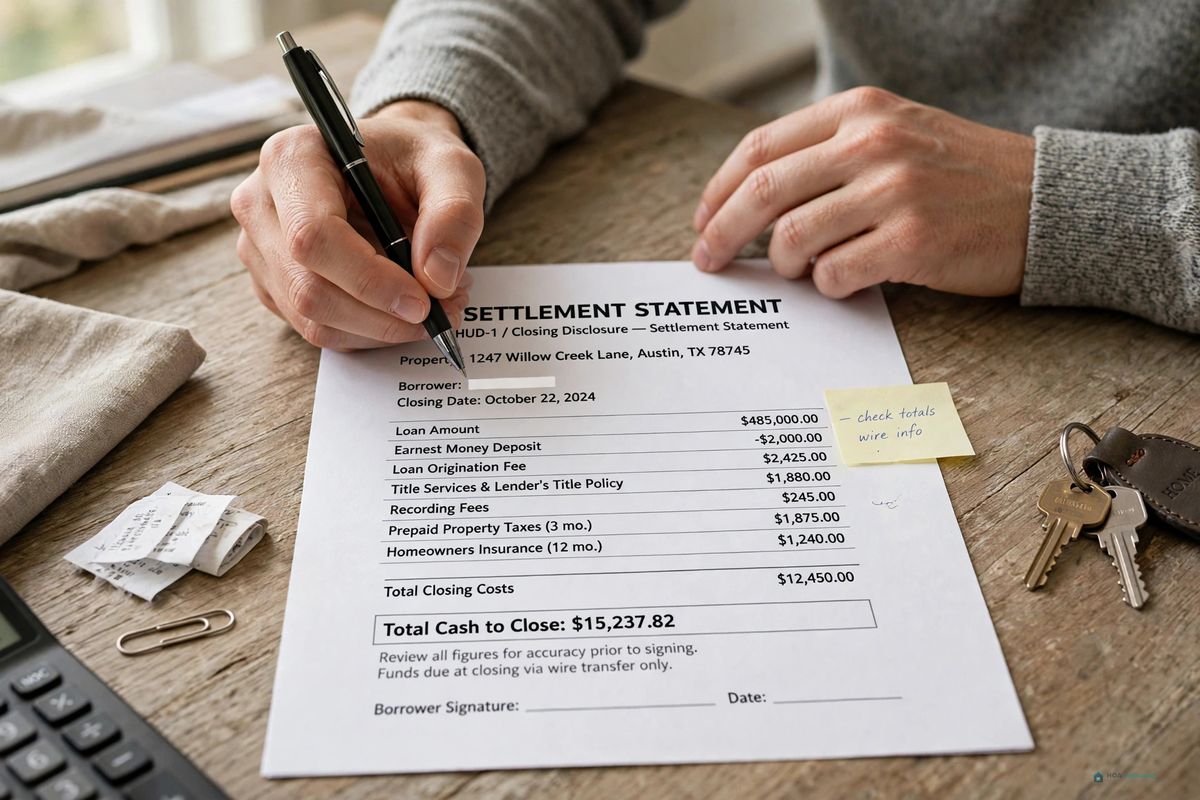
Because dues are billed by the association in advance, buyer and seller split the closing month by the day. Worked example: dues are $300 per month and you close on day 20 of a 30-day month. The seller owned the home for 19 days and owes $190; you own it for 11 days and owe $110. The settlement statement shows this as a credit and debit, and if the seller prepaid the full month or quarter, you reimburse the unused portion.
The same proration applies to any special assessment instalments and to the one-time closing charges — transfer fee, estoppel fee, and capital contribution — that associations bill at transfer.
The trap: thinking you are covered
Every year, owners fall behind on dues they believed were escrowed. The association does not know or care what your mortgage servicer collects: unpaid dues accrue late fees, become a lien, and in most states can be foreclosed. If you take one action from this article, make it this one — find your association’s payment portal or coupon book today and set up your own autopay, separate from your mortgage payment.
- Check your Closing Disclosure: escrow lines list taxes and insurance only, in almost every case.
- Confirm directly with your servicer, in writing, whether dues are collected — do not rely on a verbal assurance.
- Set up autopay with the association itself, and calendar the annual budget vote, when dues amounts change.
- If you refinance or your loan is sold to a new servicer, re-confirm — escrow arrangements do not always transfer cleanly.
Frequently Asked Questions
Q: Can I ask my lender to escrow my HOA dues?
You can ask — a minority of servicers offer it as a courtesy or require it for certain condo loans — but most will decline, because dues change by board vote and are harder to administer than tax bills. If yours declines, replicate the effect yourself with a monthly automatic transfer to a savings sub-account.
Q: Do HOA dues count against my mortgage approval?
Yes. Lenders add monthly dues to your housing costs in the debt-to-income calculation, and verify the amount from association documents. High dues can reduce your maximum loan or, at the margin, cost you the approval.
Q: What happens if I miss HOA payments because I thought they were escrowed?
The dues are still owed, with late fees, and the association can lien and ultimately foreclose regardless of the misunderstanding. Contact the association immediately, explain, and request a payment plan — boards are far more flexible before an account goes to a collections attorney.
Q: Are condo fees treated differently from HOA dues for escrow?
Not in principle: condominium association dues are also billed directly and rarely escrowed. The difference is size — condo dues bundle insurance and building services, so the monthly amount at stake is usually much larger.
📊 Calculate Your HOA Costs
Use our free HOA Fee Calculator to estimate your true lifetime HOA expenses — with year-by-year breakdown.
Calculate Now →