
HOA Transfer Fees, Estoppel Letters & Capital Contributions: What Buyers and Sellers Actually Pay at Closing
What HOA charges appear at closing?
Three HOA charges surprise buyers and sellers at closing. The transfer fee, charged by the management company to move the account to the new owner, commonly runs $100 to $500. The estoppel letter or resale certificate fee, which legally confirms what the seller owes, commonly runs $100 to $250. And many associations charge a capital contribution — typically two to three months of dues — paid by the buyer into the reserve fund. Together, expect roughly $1,000 to $2,000 in HOA-related closing charges on a typical purchase, on top of prorated dues.
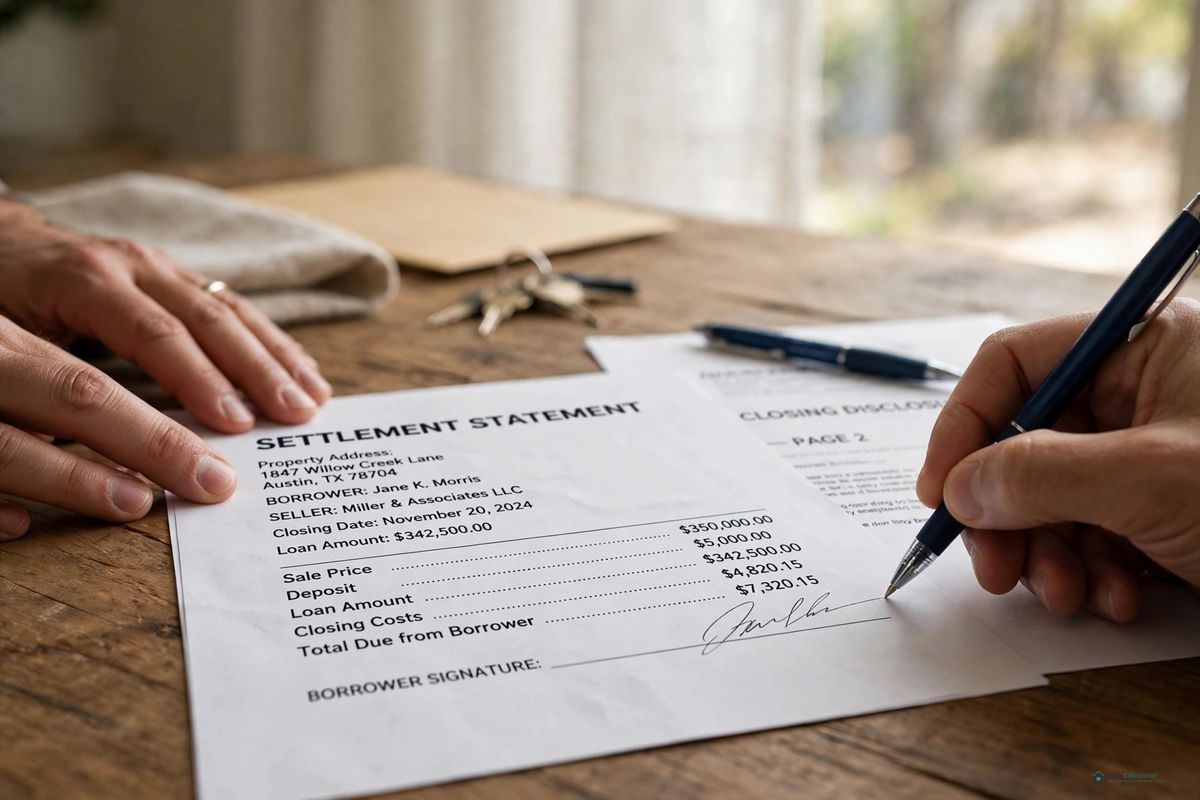
The down payment and closing costs get all the attention — then the settlement statement arrives with three extra HOA line items nobody mentioned.
What is an HOA transfer fee?
When a home in an association changes hands, the management company has to close the seller’s account, open the buyer’s, update the ownership records, and issue new credentials and documents. The transfer fee is what it charges for that work. It is a flat administrative fee, not a tax, and it commonly runs from $100 to $500 depending on the manager and the state.
Who pays it is a matter of contract, not law, in most states — the purchase agreement decides. In practice the buyer often pays it because the account is being set up for them, but in competitive markets sellers regularly absorb it. Read the line on your settlement statement before closing day, not after: transfer fees are one of the most commonly disputed junk-fee-style charges in community association closings, and once the sale funds, they are almost never refunded.
What is an estoppel letter, and why does it cost money?
The estoppel letter (called a resale certificate, payoff statement, or demand statement in some states) is the association’s legally binding statement of the seller’s account: current dues, unpaid balances, pending special assessments, violations, and any amounts that will be owed at closing. Lenders and title companies require it because a buyer generally takes the home free of the seller’s HOA debts only if the association has certified them.
The fee for preparing it commonly runs $100 to $250, and rush orders cost more. Sellers usually pay, because it certifies their account. Several states regulate both the fee and the turnaround time by statute, so if a manager quotes a figure far above this range or a wait of several weeks, check your state’s resale disclosure law before paying.
What is a capital contribution?
A capital contribution is a one-time payment the buyer makes into the association’s reserve fund at closing. The logic is that a new owner immediately benefits from reserves past owners built up — the roof fund, the paving fund — so they buy into them. It is set by the association’s governing documents, and the most common formula is two to three months of regular dues.
Unlike the transfer fee, a capital contribution is not junk: the money goes into the association’s reserves, not the manager’s pocket, and a healthy reserve is exactly what protects you from special assessments later. You can check the fund it feeds with our reserve guide and calculator before you buy.
Before closing, run the association’s numbers through the Reserve Fund Percent-Funded Calculator and read the resale certificate line by line — our documents checklist shows exactly what to look for.
What does Florida law cap?
Florida is one of the states that caps part of this by statute. For condominiums, where the declaration provides for a transfer fee, Florida law limits it to $150 per applicant (Fla. Stat. § 718.112(2)(k)). Florida also regulates estoppel certificate fees and delivery times for both condominiums and homeowners associations, including a standard fee schedule and a cap on the total charged when a delinquent account is involved.
The practical lesson generalises beyond Florida: transfer and estoppel charges are set by a mix of your documents, your manager’s contract, and your state’s statute — and the statute wins where it speaks. If a charge looks invented, ask for the document or statute that authorises it, in writing.

How to budget and negotiate these charges
- Ask for the association’s full closing fee schedule during your document review period, not at the closing table.
- Confirm which charges the purchase contract assigns to you — and negotiate the transfer fee to the seller if the market allows.
- Verify the estoppel figures against the seller’s payment history; errors in payoff statements are common and correctable before funding.
- Budget a capital contribution of two to three months of dues as a default assumption until the documents tell you otherwise.
- In Florida, check any condo transfer fee against the $150 statutory cap.
Frequently Asked Questions
Q: Are HOA transfer fees negotiable?
The amount is usually set by the management company’s contract or the governing documents, so the fee itself is rarely negotiable — but who pays it is. The purchase contract can assign it to the seller, and in a buyer’s market that is a reasonable ask.
Q: Is a capital contribution the same as a transfer fee?
No. A transfer fee pays the management company for administrative work. A capital contribution goes into the association’s reserve fund and benefits the community — including you, as the incoming owner. They appear as separate line items and are paid to different parties.
Q: Can an HOA charge whatever it wants for an estoppel letter?
No. Many states cap estoppel or resale certificate fees and set delivery deadlines by statute, and the fee must also be authorised by the governing documents. Fees commonly run $100 to $250; a quote far above that is worth challenging with the statute in hand.
Q: Do I pay these charges when I sell, too?
Sellers typically pay for the estoppel letter certifying their account, and they settle any unpaid dues and assessments at closing. The transfer fee and capital contribution are more often the buyer’s, but the contract controls — read it before you sign, not at the closing table.
📊 Calculate Your HOA Costs
Use our free HOA Fee Calculator to estimate your true lifetime HOA expenses — with year-by-year breakdown.
Calculate Now →