
Dues Kept Low for Decades, Reserves at 9% — Then a $3M Assessment Lands
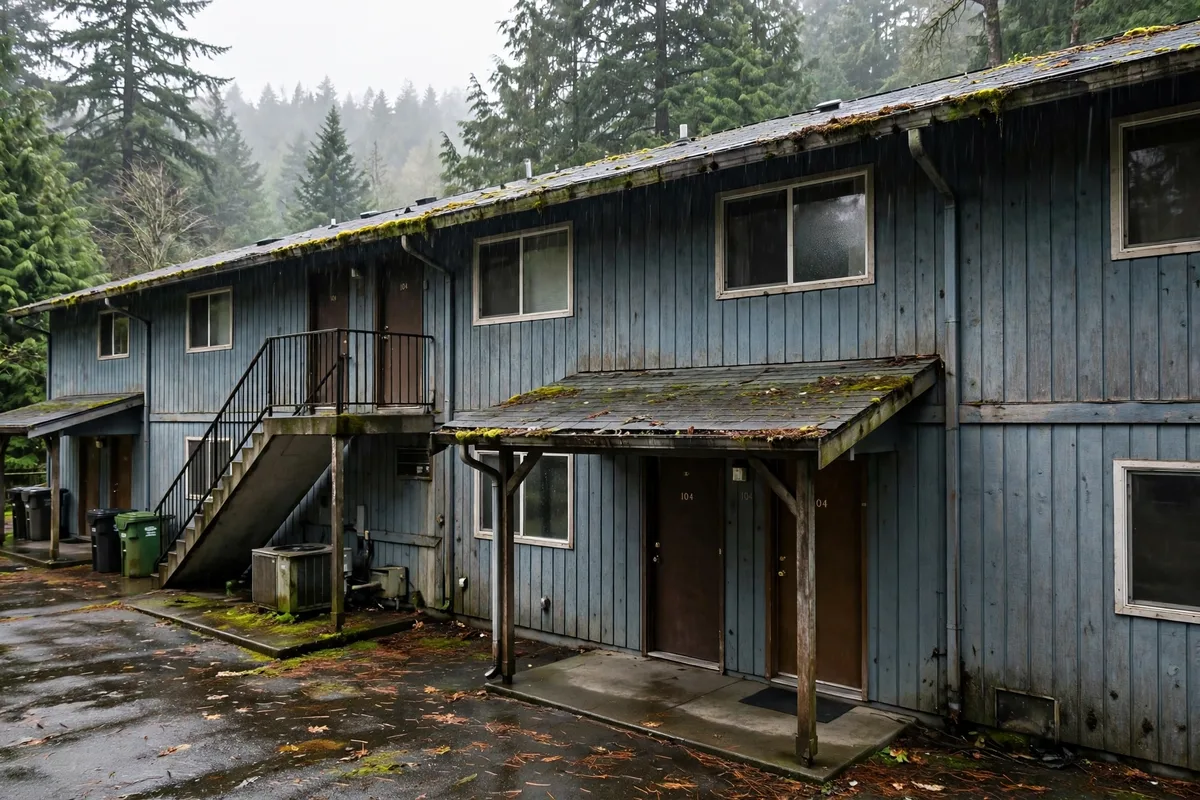
Every owner who enjoyed those frozen dues got a discount. The bill did not vanish. It was forwarded — with deterioration as the interest — to whoever happened to own a unit when the siding failed.
How do reserves end up at 9% of target?
Percent funded is a simple ratio: the money actually in the reserve account, divided by the balance the reserve study says should be there by now given the age and wear of everything the association owns. One hundred percent does not mean rich. It means exactly on schedule. Nine percent means the association saved less than a tenth of what its own buildings have already used up.
Getting to 9% takes decades, and the treasurer in this case said how: previous boards refused to raise dues. It is the easiest vote a board ever takes. Nobody thanks a board for a dues increase, and owners planning to sell have every reason to keep dues flat and let the future look after itself. Each board inherits a slightly older building and a slightly bigger gap, and passes both along. The number does not drift to 9% by accident. It is chosen, a little at a time, at every budget meeting for thirty years.
Why do the siding and the roofs fail at the same time?
Because they were installed at the same time. A complex built in one phase has components that age in lockstep, and the expensive ones share a calendar. This site's guide to rising fees puts typical roof life at 20 to 30 years and elevators at 20 to 25 — siding and waterproofing live in the same window. A building that is 30 years old is not unlucky to need everything at once. It is simply 30 years old.
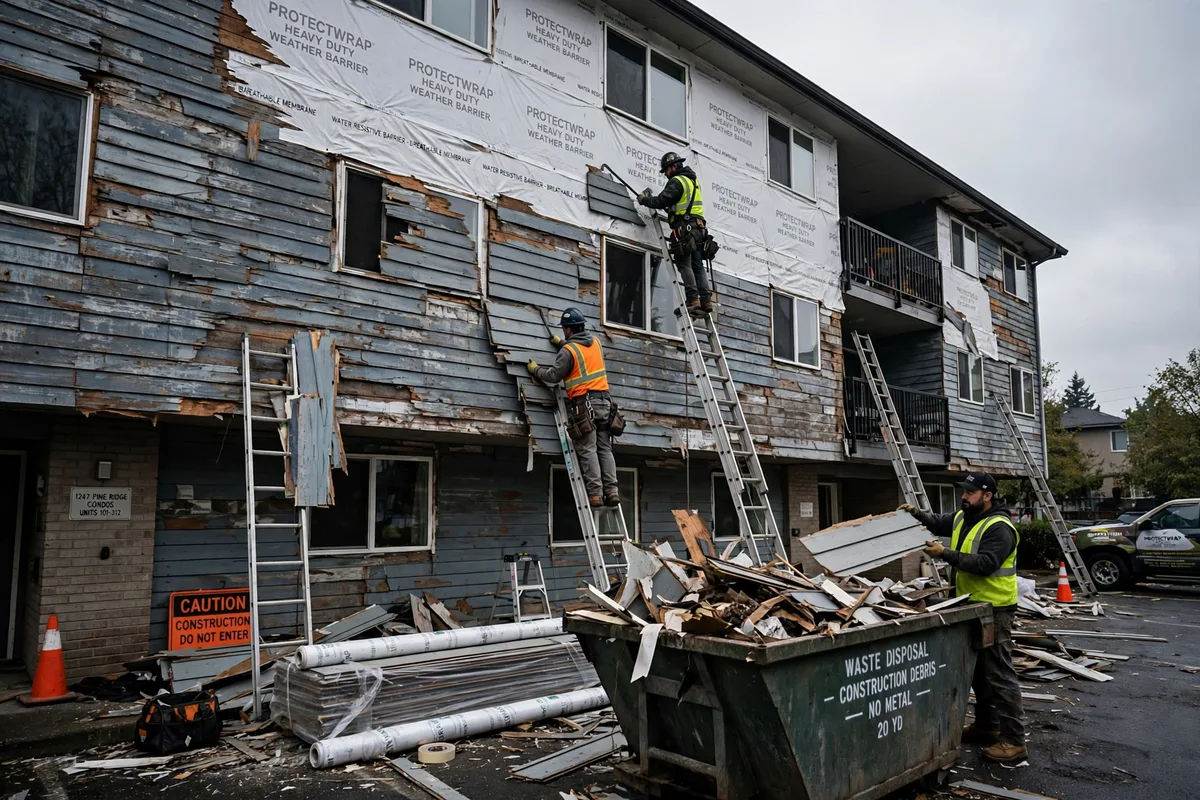
Why is the $3 million split by square footage?
Because that is the allocation formula in the declaration — and the formula, not the board's mood, decides your share. Single-family associations often split costs equally per home. Condominiums usually allocate by percentage interest, which tracks unit size, so a bigger unit pays more of the roof it sits under. The board cannot switch formulas for one project because the outcome feels fairer. The deed set the split long before this board was elected.
The asker's share is over $20,000. Purely as arithmetic on their figures: at an equal split, a $20,000 share of $3 million would imply about 150 units. With a square-footage split, shares spread around that kind of average — smaller units below it, larger units above it. Either way, the mechanism is the same one that kept their purchase looking affordable: their unit's percentage of the building. It set their share of the reserves that were not collected, and now it sets their share of the bill.
We closed less than six months ago — is there any recourse?
This is the question the couple actually asked, and the honest answer is: less than you hope, and it depends on the paperwork. An assessment attaches to the unit. The board's claim is not really against the seller who enjoyed the low dues, or against you personally — it is against the property, and you own the property now. The timing, six months after closing, feels like it should matter. Legally, it usually does not.
Where recourse can exist is disclosure. Before closing, you should have received the association's resale disclosure, and that packet is supposed to show the reserve position and any approved or pending assessments. If the documents you were given showed a healthy fund or hid a planned assessment, that is a different conversation — one for a Washington real estate attorney, with the packet in hand. If the packet showed 9% funded and nobody read that page, the system technically worked and the protection was there for the taking. That is a hard answer. It is also why the next section matters more than this one.

What should the resale certificate have told them?
Almost everything, if it was read closely. As this site's documents checklist sets out, the resale certificate is the legally binding snapshot of the unit you are buying: the exact current dues, whether the seller's account is paid up, any outstanding violations, and any board-approved but not-yet-billed assessments — which you inherit at closing. Alongside it, the reserve study shows the percent funded and whether the budget collects what the study recommends.
A buyer reading those two documents in this King County complex would have seen a fund at 9% of target and a building full of original siding and roofs. That combination is not a subtle hint. It is a $3 million assessment wearing a name tag.
Our HOA Documents Checklist walks through the four documents to audit in your review window, and the reserve study is first on the list for exactly this reason.
If you are mid-purchase right now, that window — usually a matter of days — is the whole game. Spend it on the reserve study, not the paint colours.
Isn't keeping dues low what owners actually want?
It is what owners ask for, and boards that deliver it get re-elected. But cheap dues are not a saving. They are a loan taken out in the building's name, repaid by whoever owns a unit when a major component fails. The owners who sold five years ago kept the discount. The couple who bought in October 2025 got the repayment schedule. Nothing about that transfer was disclosed as a price, yet it was the biggest financial term of their purchase.
It distorts the market, too. A unit with dues frozen for decades looks cheaper to run than an identical unit in an honestly funded building, so buyers pay more for it — capitalising the trap into the sale price. The honestly run building next door, with higher dues and a 75% funded reserve, is the better buy at the same price. It just never looks like it in the listing, because listings show the dues and not the percent funded. Smart buyers ask for both numbers.
How do you check the reserves before you buy?
Four checks, all doable inside a normal review period. First, find the percent funded and grade it on the published scale: 70% or above is strong, 30% to 69% is the fair middle, under 30% is critical. Second, check the study's date — one more than about five years old may not reflect current construction costs. Third, compare what the study recommends collecting with what the budget actually collects; a board collecting less is borrowing from you. Fourth, read two years of meeting minutes for repeated mentions of roofs, siding, engineers, or tabled assessments.
You can run the headline number yourself with the Reserve Fund Percent-Funded Calculator: enter the reserve balance and the study's 100% funded figure, and it shows the shortfall per home — the number to put on the table when you negotiate.
None of this requires expertise the average buyer lacks. It requires treating the association's finances like part of the property, because they are. The King County couple did nothing unusual. They trusted the dues figure, like almost everyone does. The fix is not suspicion. It is one ratio, read before closing instead of after.
Frequently Asked Questions
Q: Can a new owner refuse to pay because the problems pre-date the purchase?
No. Assessments run with the unit, not with the person who owned it when the roof aged. The board's claim is against the property and its current owner. That is exactly why the pre-purchase document review matters so much — after closing, your bargaining power is gone.
Q: What percent funded is actually safe?
On the scale this site publishes, 70% funded or above is the low-risk zone, 30% to 69% is the moderate middle where most associations sit, and under 30% is critical. The King County fund at 9% was not borderline. It was at the bottom of the scale.
Q: Should low dues alone put me off buying a condo?
Not alone — but they should change your price. Work out the reserve shortfall per home and treat it as part of what you are paying, because one way or another you will pay it: in dues, in an assessment, or in a discount when you sell to a buyer who did the same maths.
Q: Can owners force a board to raise dues gradually instead of levying assessments?
Owners elect the board, and in many communities they can replace one that refuses to fund the reserves. What owners cannot do is vote the underlying costs away. Roofs and siding get replaced on their own schedule — the only real choice is whether the money was collected slowly beforehand or all at once afterwards.
📊 Calculate Your HOA Costs
Use our free HOA Fee Calculator to estimate your true lifetime HOA expenses — with year-by-year breakdown.
Calculate Now →