
A $20,000 Special Assessment: Lump Sum or the Association Loan? The Interest, Costed
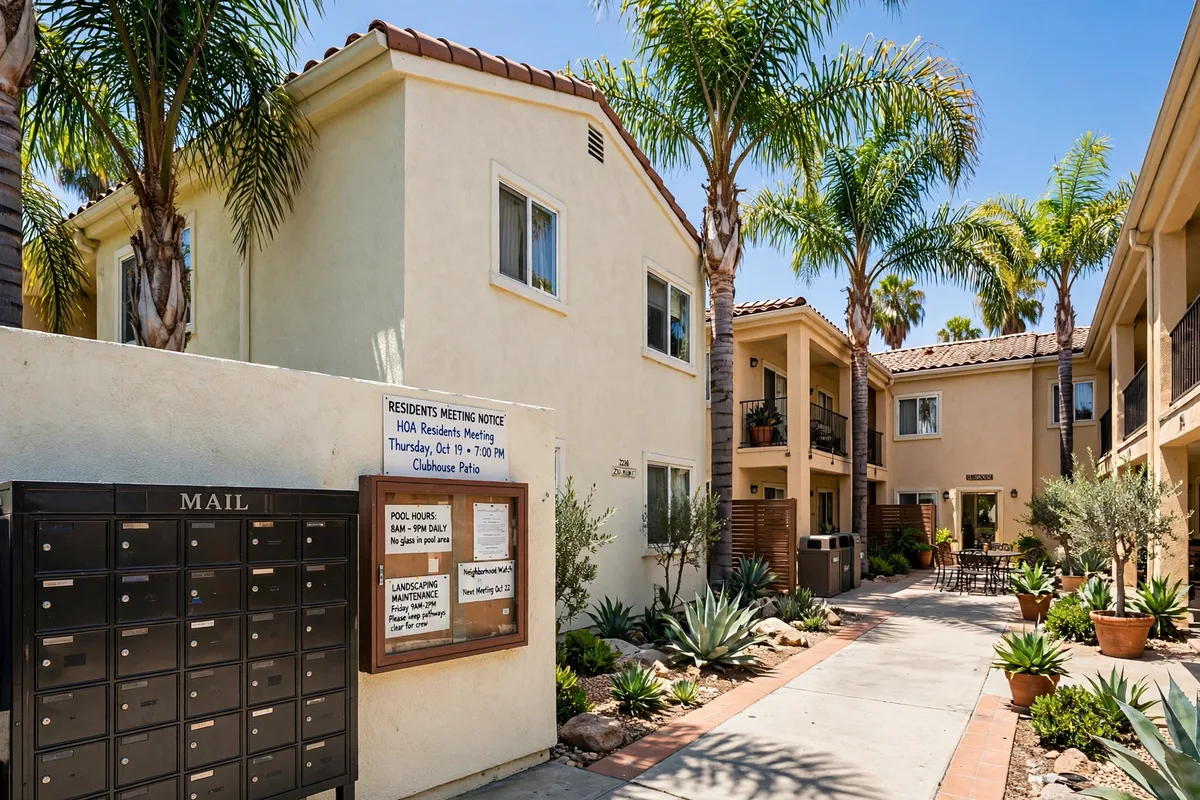
“Who has $20,000 sitting around?” Almost nobody — which is exactly why the loan option exists. The real question is what that option costs, and nobody in the thread had run the numbers.
Is a $20,000 special assessment even legal?
Almost always, yes — the power to assess is the core power an association has. Your declaration gives the board authority to charge owners for common expenses, and a special assessment is how a board collects for a cost the regular budget and reserves cannot carry. California associations work under the Davis-Stirling Act, and boards there levy assessments under it every week. A $20,000 figure feels illegal because it is large. Size alone does not make it unlawful.
What can make an assessment challengeable is procedure, not size. Did the board approve it at a properly noticed meeting? Does it stay inside any cap or vote requirement in your documents? Is the money going to a purpose the association is responsible for? Those are the questions a court looks at — ask them first, in writing, with the documents in hand. If the board followed its documents and the statute, the assessment stands, and the practical fight moves to how it is paid.
Lump sum or loan — what is the real difference?
The lump sum is $20,000 once, and then it is over. The loan spreads the same project across years, and charges you for the spreading. Here is the asker's scenario costed out: the association borrows about $1,000,000. At an example 7% rate — the middle of the range this site publishes for assessment loans, 6.5% to 10.5% — a 10-year loan means about $11,611 a month across the association, $1,393,302 paid in total, and about $393,302 of that is interest. Your share of the interest alone is roughly $7,866 on top of your $20,000.
Stretch matters more than most owners expect. The same loan over 5 years at the same example rate costs about $188,072 in total interest — roughly $3,761 per unit — but the monthly bite rises to about $396 per unit instead of $232. So the choice is not loan versus no loan. It is which loan: cheaper and heavier each month, or lighter each month and thousands more expensive by the end. Any board proposing a loan should be able to show you both versions of that table, with the actual rate and fees from the lender, before anyone votes.

What does a $1,000,000 loan tell you about the building?
Do the division the poster did not: $1,000,000 of project, at almost $20,000 per unit, implies a community of roughly 50 units. That is arithmetic from the asker's figures, not a detail they gave — but it matters. In a 50-unit community, every owner's share of everything is big. There is no large crowd to absorb a roof, a repaving, or a structural repair. Small associations feel like they should be cheaper to run. For capital work, the opposite is true.
Is an anonymous mail-in vote shady?
It feels shady. It usually is not. Secret ballots are a normal part of association governance — California law actually requires secret balloting for certain owner votes, including assessment votes above set thresholds — so owners can vote against a board proposal without a neighbour on the board knowing. An anonymous ballot protects the voter, when it is run properly.
Run properly is the part to verify. Ask who counts the ballots and whether that person is independent. Ask what the quorum is and what happens if it is not met. Ask how much notice was given, and whether the ballot states the rate, the term, and the total interest of the loan, or just the monthly figure. A board can hold a perfectly legal secret ballot and still present the choice dishonestly, by showing the loan as “only $232 a month” without the $393,302 of interest behind it. Judge the paperwork, not the envelope.
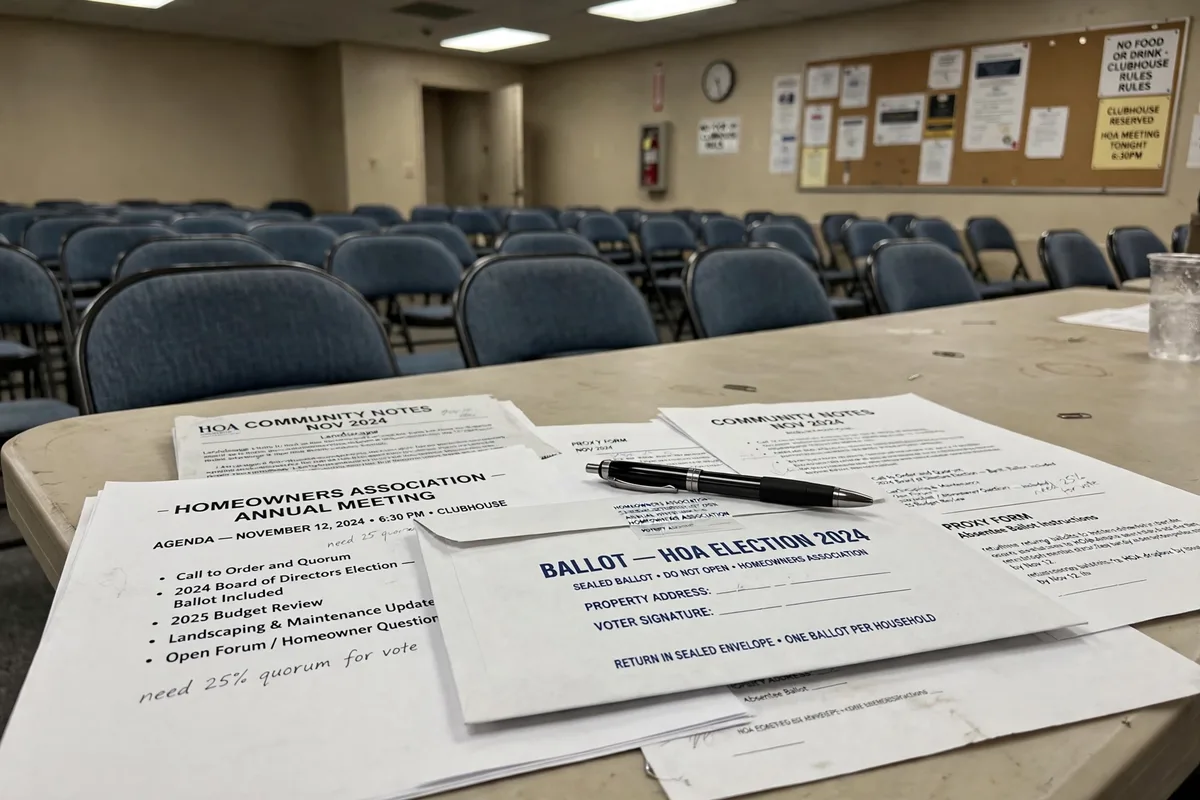
What stops the board doing this again in three years?
Honestly? Nothing automatic — and the poster who asked this is asking the sharpest question in the thread. An assessment fixes a hole. It does not fix the habit that dug it. If the board spends the $1,000,000, keeps dues where they were, and lets the reserve fund sit near empty, then yes — the next system brings the next assessment, on roughly the timetable the reserve study already predicts.
The protection is a funded reserve and a written funding plan. On this site's published scale, a reserve at 70% funded or better is low risk, and under 30% is where assessments breed. So the follow-up question after any vote should be: what is our percent funded today, and what dues level gets us to a defensible number before the next component fails?
You can check any association's position in a minute with the Reserve Fund Percent-Funded Calculator — and if your board cannot state its percent funded, that silence is your answer about three years from now.
What if you can't pay the lump sum and don't want the loan?
You may have a third path: a payment plan on the assessment itself. As this site's assessment guide notes, California Civil Code Section 5665 and Texas Property Code Section 209.0062 are among the state rules that require associations to offer owners reasonable instalment arrangements. A board plan can split the difference — monthly payments, but no $393,302 of interest leaving the community.
Private borrowing is the other comparison to run. The figures this site publishes for assessment-era borrowing put HELOCs around 7.5% to 9.5% and unsecured personal loans around 9% to 18%. If your own rate would beat the association loan's rate — and you can actually get approved — paying the lump sum with your own cheaper money is rational. If it would not, the association loan, voted eyes-open, beats a credit card at panic rates. Check your HO-6 loss assessment coverage last: it helps with assessments from covered losses, not with a building that simply wore out.
What should you ask before you vote?
Treat the ballot as a purchase, because it is one. Before you mail anything, get answers to a short list and keep them with your records.
- What is the project, exactly — and can I see the bids and any engineering report behind the $1,000,000?
- If we borrow: what is the rate, the term, the fees, and the total interest over the life of the loan — in dollars, not just per month?
- Is there a discount or an interest saving for paying the lump sum instead?
- Can owners prepay their loan share later without penalty?
- What is our reserve percent funded today, and what is the funding plan after this project?
- Who counts the ballots, and what quorum and approval threshold apply?
Then model your own position before the deadline.
Our Special Assessment Calculator shows your share as a lump sum, as monthly instalments, and with loan interest added — which is the whole of this decision on one screen.
A $20,000 assessment is a bad month. A $20,000 assessment you voted on without seeing the interest is a bad decade.
Frequently Asked Questions
Q: Can I be forced into the association loan if I voted against it?
Yes, in effect. An association loan is a debt of the association, repaid through regular billing to every owner. If the loan was approved the way your documents and state law require, your share of the repayments is part of your assessments whether you voted yes, no, or not at all.
Q: Do I still owe my share if I sell while the loan is running?
It depends on how the loan and the assessment were structured. Some associations record the full assessment against each unit, so a seller settles or a buyer assumes it at closing, and it shows up in the resale certificate either way. Ask the manager, in writing, what a sale does to your balance before you list.
Q: Is the interest on an assessment tax deductible?
For a home you live in, generally no — the same position this site takes on assessments themselves. For a rental unit, assessments for repairs are usually deductible as a rental expense, while capital improvements are typically added to your cost basis. Confirm your own case with a tax professional.
Q: What happens if I pay neither the lump sum nor the loan instalments?
The same collection path as any unpaid assessment: late fees and interest, then a lien against your unit, and in many states foreclosure on that lien even while your mortgage stays current. If money is the problem, a written payment plan request early is worth far more than silence.
📊 Calculate Your HOA Costs
Use our free HOA Fee Calculator to estimate your true lifetime HOA expenses — with year-by-year breakdown.
Calculate Now →