
How Does a $400K Condo Get a $150K Special Assessment? The Reserve Math, Worked Out
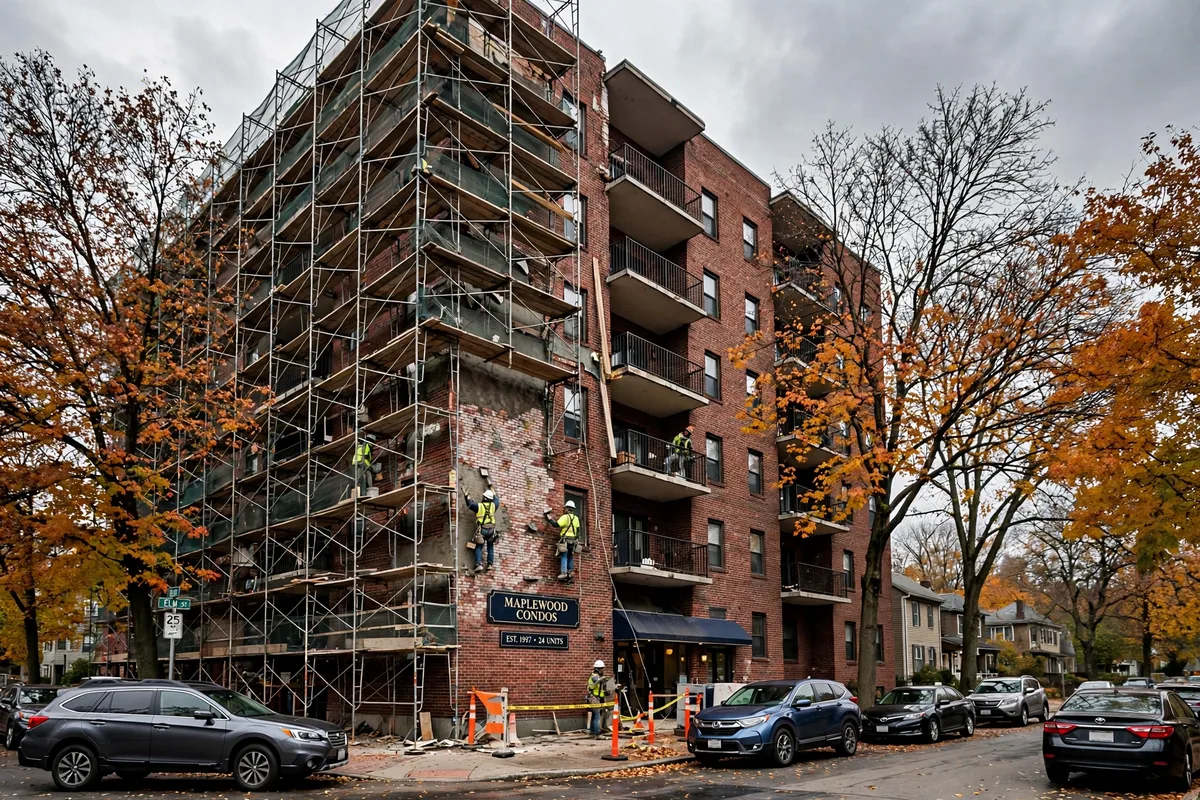
A $150,000 bill for a home worth $400,000 sounds like a typo. It is not. It is what deferred maintenance looks like when it finally sends the invoice.
What exactly is being paid for here?
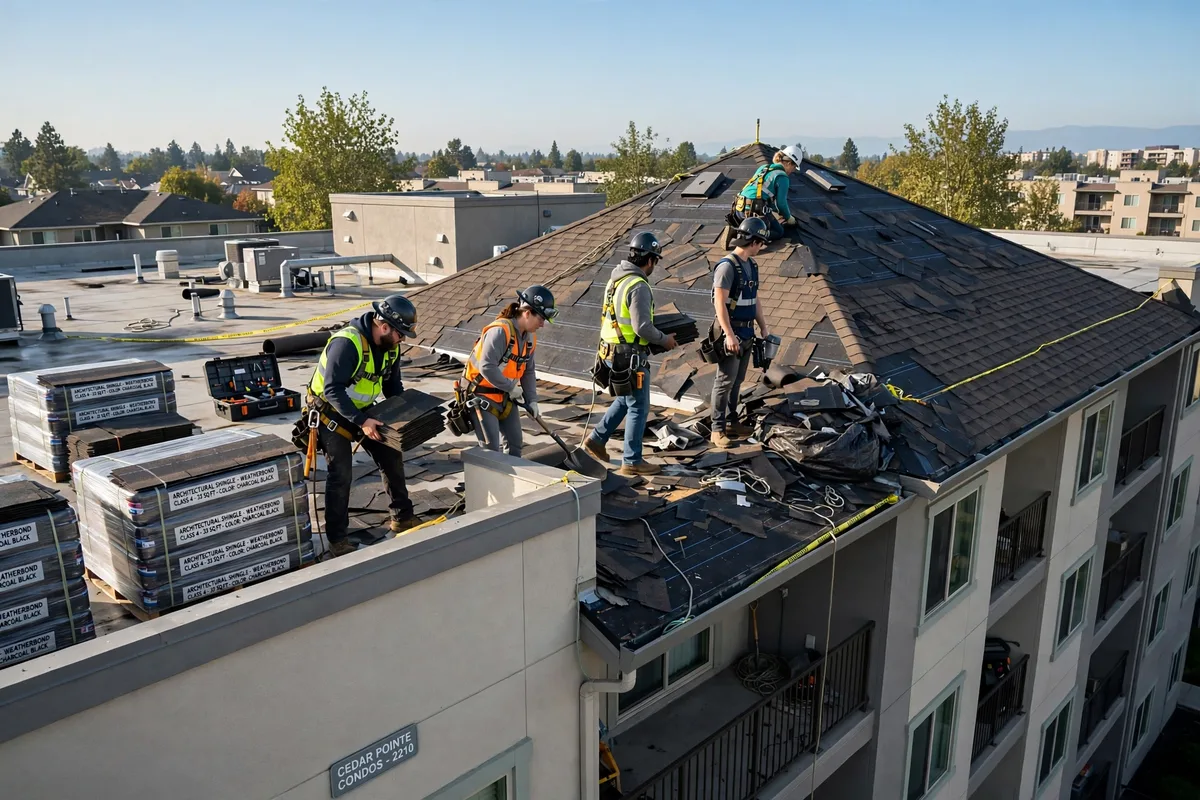
Start with the building itself. The poster described two buildings, eight floors, roughly 150 units, in a Boston suburb. The work is structural: the facade — the exterior skin that keeps water out of the walls — and the roof. Those are not cosmetic items. A failing facade lets water into the structure, and water in the structure turns a repair bill into a much bigger repair bill. A roof at the end of its life does the same thing from the top down.
For scale, this site's special assessment guide puts a typical roof replacement assessment at $8,000 to $18,000 per unit. That range assumes the roof is the only big job. The Boston case is nowhere near it because two of the most expensive systems on a building are failing in the same window, in a high-cost construction market. It is not one project. It is two, stacked.
How does the math get to $150,000 per unit?
The arithmetic is brutally simple, and you can check it on the back of an envelope. About $150,000 per unit, times about 150 units, equals about $22.5 million in total project cost. That is the asker's per-unit figure, multiplied out — not a contractor's quote from this site. But it shows the shape of the problem. A project in the tens of millions is normal territory for facade restoration plus roofing across two eight-storey buildings once scaffolding, engineering, and code work are priced in.
Now subtract the savings. The poster said the association had a couple of millions in reserves. Take $2 million off $22.5 million and roughly $20.5 million is still missing. Spread over 150 units, the reserves knock only about $13,000 off each unit's share. The assessment is huge not because anyone chose a huge number, but because the gap between the bill and the bank account is huge. There was also a smaller special assessment a few years earlier. In hindsight, that was the warning light.
Why didn't the reserves cover it?
Because reserves are built for the plan, and the plan only works if the contributions match it. A reserve fund is the association's savings for big shared components — roof, facade, elevators, paving. The health measure is percent funded: the actual balance against what the reserve study says should be there by now. On this site's published scale, 70% to 100% funded is low risk, 30% to 69% is moderate, and under 30% is critical, with major assessments likely inside the next two years.
A couple of million sounds like real money. Against a $22.5 million need, it is about 9% of this one project alone. That is the trap owners fall into when they read a balance instead of a percentage. Two million in the bank feels responsible. Two million against the true replacement cost of everything the building owns is a fund that was never going to cover the big decade.
Do owners get a say in an assessment this big?
Some say, but rarely a veto over necessary repairs. The board's authority to levy assessments comes from the association's governing documents, and those documents usually let the board charge owners for the cost of maintaining the common elements without a membership vote. Owner votes, where they exist, tend to cover things like borrowing, or spending above a cap written into the documents. The exact rules sit in your own declaration and bylaws and in your state's condominium statute, so read those before assuming a vote was required — or that one was skipped illegally.
What owners almost always do have is the right to information. You can ask for the engineering report behind the figure, the bids the board received, the reserve study, and the minutes where the assessment was approved. If the board cannot produce an engineer's report and competing bids for a $22.5 million programme, that is a legitimate fight. If it can, the fight is usually about how the bill is collected — lump sum, instalments, or a loan — not whether the work happens.

Will everyone just sell, and crash the values?
Some owners will sell. The values question is subtler than a crash. A pending assessment of this size has to be disclosed to buyers through the resale certificate, so nobody buys in blind. What buyers do is price it in: a unit worth $400,000 with $150,000 due is not competing with a clean $400,000 unit across town. Expect offers that treat the assessment as part of the purchase price, because that is exactly what it is.
That cuts both ways. The seller who pays the assessment, or credits it at closing, sells a unit in a building with a new facade, a new roof, and a funded plan. The seller who waits sells the problem instead. Neither outcome is a market collapse. It is a building whose true cost was hidden for years becoming visible all at once — the market adjusting to the real number in one season instead of over twenty years of honest dues.
Could a developer really buy the building and tear it down?
It gets asked in almost every thread like this one, usually half in hope and half in dread. Condo termination and deconversion do exist: a building can be sold as a whole, with proceeds split by ownership share. But the approval thresholds in declarations and state law are high, the process is slow, and it needs a buyer who thinks the land is worth more than the buildings — after paying out every owner.
What should an owner in this building do first?
Get the paper before you get angry. Ask for the reserve study, the engineer's facade and roof reports, at least two bids, and the minutes approving the assessment. Then run your own share through the numbers instead of staring at the headline figure.
Work out your share as a lump sum, as monthly instalments, and with loan interest added, using our Special Assessment Calculator — the collection method is often negotiable even when the project is not.
Ask three specific questions at the next meeting. Can the work be phased, facade first or roof first, so the cash call is split across years? Will the association take a loan so owners pay monthly instead of in one lump? And what is the percent funded now, and what dues level keeps this from happening again in ten years? Check your own HO-6 policy's loss assessment coverage too, but with clear eyes: it responds to assessments from covered losses like storm damage, not to wear and age. A $150K assessment is a crisis. It is also, almost always, a bill that was visible in the reserve study a decade before it landed.
Frequently Asked Questions
Q: Can a board charge more than a third of what my condo is worth?
There is no rule that caps an assessment at a percentage of your home's market value. Assessments are set by the cost of the work and the allocation formula in the declaration, not by what units sell for. Whether a specific assessment is valid turns on procedure: was it approved the way the documents and state law require, for a purpose the association is responsible for?
Q: What if I simply cannot pay $150,000?
Do not ignore it. Unpaid assessments draw late fees, become a lien on your unit, and in many states can be foreclosed. Talk to the board early about instalments or an association loan — boards have far more room to help before an account goes to a collections attorney. This site's guide to assessments you cannot afford walks through the options step by step.
Q: Will my condo insurance pay any of this?
Only in narrow cases. Loss assessment coverage on an HO-6 policy responds when an assessment stems from a covered loss, such as storm or fire damage to common property. An assessment to replace a worn-out facade and an aged roof is maintenance, and maintenance assessments are not covered.
Q: How can a buyer spot a building like this before purchasing?
Read the reserve study, not the dues amount. Check the percent funded — under 30% is the danger zone on this site's scale — check how old the study is, and read two years of meeting minutes for talk of facade, roof, or engineering reports. Then price the shortfall per home into your offer.
📊 Calculate Your HOA Costs
Use our free HOA Fee Calculator to estimate your true lifetime HOA expenses — with year-by-year breakdown.
Calculate Now →